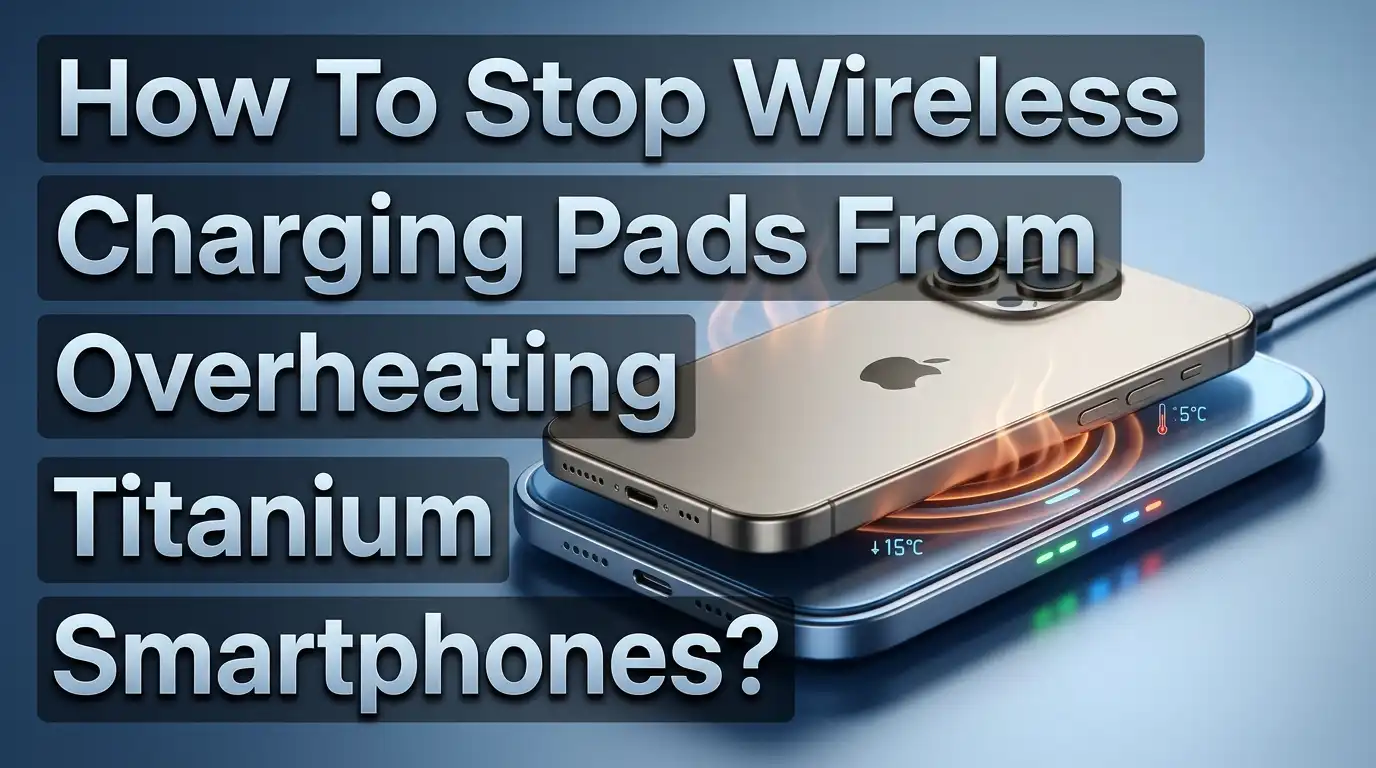
How To Stop Wireless Charging Pads From Overheating Titanium Smartphones?
Titanium smartphones look incredible and feel premium. But they come with a hidden downside that frustrates many users. Titanium conducts heat roughly six times less efficiently than aluminum.
If you own a titanium smartphone and rely on wireless charging, you have probably felt that alarming warmth. You may have even seen the dreaded “iPhone needs to cool down” warning. This is not a defect. It is physics. The same premium material that makes your phone tougher and lighter also makes it harder for heat to escape during wireless power transfer.
The good news? You can solve this problem. This guide walks you through practical, tested solutions that will keep your titanium phone cooler on the charging pad. Every fix here is actionable and easy to follow. You do not need special tools or technical knowledge.
Key Takeaways
- Titanium frames trap heat because titanium has much lower thermal conductivity than aluminum. This is the root cause of overheating during wireless charging on phones like the iPhone 15 Pro, iPhone 16 Pro, and Samsung Galaxy S25 Ultra.
- Coil alignment is the single biggest factor in reducing heat. Misaligned coils force the charger to work harder, creating excess thermal energy. Magnetic alignment systems like Qi2 and MagSafe help solve this.
- Phone cases are a common hidden cause of overheating. Thick silicone, leather, and metal backed cases act as insulation and block heat from escaping. Removing the case during wireless charging can lower temperatures significantly.
- Active cooling chargers with built in fans are one of the most effective solutions available. These chargers push heat away from the device during the charging process and maintain steady power delivery.
- Background apps and screen on usage during wireless charging generate extra processor heat that compounds the wireless charging heat. Closing apps and leaving the screen off makes a measurable difference.
- Charging environment matters more than most people realize. Direct sunlight, soft fabric surfaces, and enclosed spaces all raise temperatures. A cool, ventilated, hard surface is the ideal charging location.
Why Titanium Smartphones Overheat During Wireless Charging
Wireless charging produces heat by nature. Energy transfers from the charging pad coil to the receiving coil inside your phone through electromagnetic induction. This process is less efficient than wired charging. Some energy is always lost as heat during the conversion.
On aluminum phones, this heat spreads quickly through the metal frame and dissipates into the air. Aluminum is an excellent thermal conductor. But titanium behaves very differently.
According to data from the National Institute of Standards and Technology, titanium’s thermal conductivity is roughly one sixth that of aluminum. This means the frame of your titanium phone acts more like an insulator than a heat spreader. Heat generated by the charging coil and the battery stays concentrated inside the device instead of flowing outward.
This creates a feedback loop. The phone gets hot. The internal thermal management system detects the rising temperature. It then throttles or pauses charging to protect the battery. You end up with a phone that charges slowly, gets uncomfortably warm, and takes longer to reach full battery.
How Wireless Charging Creates Heat
Understanding the heat source helps you fix the problem more effectively. Wireless charging uses electromagnetic induction to move power from one coil to another without a physical connection. The charging pad contains a transmitter coil. Your phone contains a receiver coil.
When alternating current flows through the transmitter coil, it creates a magnetic field. This field induces a current in the receiver coil inside your phone. That current charges the battery. But every step in this process loses some energy. The energy that does not make it to the battery converts into thermal energy.
The efficiency of wireless charging typically ranges between 75% and 90%. That means 10% to 25% of the energy becomes heat. At higher wattages like 15W or 25W fast wireless charging, the absolute amount of heat produced increases. This is why fast wireless charging creates noticeably more warmth than slower 5W or 7.5W charging.
Both the charging pad and the phone generate heat simultaneously. The pad heats up from the transmitter coil. The phone heats up from the receiver coil and battery. Together, they create a concentrated heat zone between the two surfaces.
The Role of Coil Alignment in Overheating
Proper alignment between the transmitter and receiver coils is the most important factor in reducing heat. When coils are perfectly aligned, energy transfers efficiently. Less energy is wasted. Less heat is produced.
When coils are misaligned, the charger compensates by increasing power output to maintain charging speed. This extra effort generates significantly more heat. Even a small offset of a few millimeters can increase thermal output.
Magnetic alignment systems solve this problem. Qi2 certified chargers and MagSafe chargers use magnets to snap your phone into the correct position automatically. This ensures the coils line up precisely every time you place your phone down. The result is more efficient energy transfer and lower temperatures.
If you use a standard flat wireless charging pad without magnetic alignment, you need to be very careful about placement. Center your phone on the pad and avoid bumping or shifting it after placement. Some charging pads include LED indicators or alignment guides to help you position the phone correctly.
For titanium phone owners, switching to a magnetically aligned charger can make a dramatic difference. The combination of titanium’s poor heat dissipation and misaligned coils is one of the worst case scenarios for overheating.
Remove Your Phone Case Before Wireless Charging
Phone cases are one of the most overlooked causes of wireless charging heat. A thick case acts as a thermal blanket around your phone. It traps the heat inside and prevents it from radiating into the air.
Certain case materials are worse than others. Thick silicone cases over 3mm create significant insulation. Leather cases trap heat effectively. Cases with metal plates, kickstands, or magnetic ring holders interfere with coil alignment and create additional energy loss.
Removing your case before placing your phone on the wireless charger allows heat to dissipate more freely from the back surface of the phone. This is especially important for titanium phones because the frame already limits heat flow. Adding an insulating case on top of an already heat trapping titanium frame compounds the problem.
If removing your case every time feels inconvenient, consider switching to a thin, wireless charging compatible case. Cases under 2mm thickness with no metal components allow better heat transfer while still providing basic scratch protection. MagSafe compatible cases are another good option because they maintain proper coil alignment without adding excessive bulk.
You should also check for foreign objects between your phone and the case. Credit cards, transit cards, or metal plates stuck to the case can absorb electromagnetic energy and generate extra heat. Remove these before wireless charging.
Use a Charger With Active Cooling Technology
One of the most effective solutions for titanium phone overheating is an active cooling wireless charger. These chargers include built in fans, airflow vents, and smart thermal sensors that actively pull heat away from your device during charging.
Standard wireless chargers rely on passive cooling at best. They let heat dissipate naturally through their surfaces. But at higher power levels like 15W or 25W, passive cooling often cannot keep up. Active cooling chargers solve this by circulating air around and beneath the phone.
Several major accessory manufacturers now offer wireless chargers with active cooling features. These chargers use ultra quiet internal fans that adjust speed based on real time temperature readings. When the charger detects rising heat, the fan speed increases. When temperatures stabilize, it slows down.
Testing shows that active cooling can reduce device temperatures by 7 to 12 degrees Fahrenheit compared to standard chargers. For a titanium phone that already struggles with heat dissipation, this temperature drop can mean the difference between steady charging and thermal throttling.
Look for chargers that combine active cooling with Qi2 or MagSafe magnetic alignment. This combination addresses both major overheating factors at once: inefficient coil alignment and inadequate heat removal.
Avoid Using Your Phone While It Wirelessly Charges
This seems simple, but it makes a significant impact. Using your phone while it sits on a wireless charger adds processor generated heat on top of charging generated heat. The two heat sources combine and overwhelm your phone’s thermal management system faster.
Activities like gaming, video streaming, video calls, and social media scrolling all push the processor to work harder. The processor generates its own heat. Your phone now has to manage heat from the wireless coils, the battery, and the processor all at the same time.
Titanium phones are especially vulnerable here. The frame cannot spread the combined heat quickly enough. Internal temperatures climb rapidly. The phone throttles charging speed, dims the display, and may even pause charging entirely.
The best practice is to place your phone face down on the charger and leave it untouched. Close background apps before placing it on the pad. Turn off the screen. Let the phone focus entirely on receiving charge without generating additional internal heat.
If you must use your phone during charging, switch to a wired charger instead. Wired charging produces less heat overall and delivers power more directly. Save wireless charging for times when you can set your phone down and walk away.
Choose the Right Charging Wattage
Higher wattage means faster charging. But it also means more heat. Reducing your wireless charging wattage is one of the simplest ways to lower temperatures on a titanium phone.
Many wireless chargers support multiple power levels. A charger rated for 15W may also support 10W, 7.5W, and 5W output. Some chargers let you select the power level manually. Others adjust automatically based on what the phone requests.
For overnight charging, you do not need fast wireless charging. Dropping to 5W or 7.5W gives your phone hours to charge slowly and generates significantly less heat. The battery fills up gently. Temperatures stay lower. Battery health benefits over time because lithium ion batteries degrade faster at higher temperatures.
If your charger does not have adjustable wattage, check your phone’s settings. Some smartphones allow you to disable fast wireless charging in the battery settings menu. This forces the phone to accept a lower power level from the charger even if the charger supports higher output.
For titanium phones, a practical approach is to use fast wireless charging only when you need a quick top up during the day. Switch to slow wireless charging or wired charging at night. This balance gives you speed when you need it and thermal protection when you do not.
Optimize Your Charging Environment
The space around your charger matters more than most people realize. Ambient temperature, surface material, airflow, and sunlight all affect how hot your phone gets during wireless charging.
Charging on a soft surface like a bed, couch, or pillow traps heat beneath the charger. The fabric insulates both the charger and the phone, preventing heat from escaping. Always place your wireless charger on a hard, flat, dry surface like a desk, nightstand, or countertop.
Direct sunlight is another common culprit. A wireless charger sitting near a window or in a car dashboard mount exposed to sun can push temperatures well beyond safe limits. The sun heats the phone externally while the charger heats it internally. Move your charger away from windows and out of direct sunlight.
Airflow helps heat dissipate. A wireless charger placed in an enclosed space like a drawer, cabinet, or between stacked objects gets no air circulation. Heat builds up in the stagnant air around the device. Place your charger in an open area where air can move freely around all sides.
Room temperature also plays a role. Charging in a hot room during summer produces different results than charging in an air conditioned space. If your titanium phone consistently overheats during wireless charging in warm months, consider running a small desk fan near the charger or moving it to a cooler room.
Keep Your Charger and Phone Clean
Dust, lint, and debris accumulate on wireless charger surfaces and phone backs over time. This buildup creates a thin insulating layer between the charger and your phone. Even a small amount of debris reduces charging efficiency and increases heat.
Clean your wireless charger surface regularly with a soft, dry cloth. Wipe the back of your phone as well. Pay attention to the area around the charging coil, which is usually centered on the device.
If your charger has airflow vents for active cooling, check these for dust buildup. Clogged vents reduce airflow and make the cooling system less effective. Use compressed air to clear any blockages gently.
Debris can also interfere with magnetic alignment on Qi2 and MagSafe chargers. If your phone does not snap firmly into place, foreign material may be preventing proper magnet contact. This leads to slight misalignment, reduced efficiency, and increased heat.
Make charger and phone cleaning part of your routine. A quick wipe every week keeps the charging interface clean and efficient. This small habit can prevent gradual heat increases that build up over weeks and months of use.
Update Your Phone Software Regularly
Software updates often include thermal management improvements that directly affect wireless charging performance. Phone manufacturers continuously refine how their devices handle heat, adjust charging speeds, and manage background processes during charging.
Apple, Samsung, and Google all release periodic updates that optimize charging algorithms. These updates can adjust the charging curve to reduce peak heat generation, improve thermal throttling response times, and fix software bugs that cause unnecessary processor activity during charging.
Check for and install software updates as soon as they become available. On iPhone, go to Settings, General, Software Update. On Android, check Settings, System, System Update. Running outdated software means you miss out on thermal improvements that could directly reduce overheating.
Some software updates specifically address wireless charging behavior. For example, after the iPhone 15 Pro launched with a titanium frame, Apple released updates that improved thermal management during wireless charging. These updates reduced reported overheating incidents without any hardware changes.
Background app management also improves with software updates. Newer operating system versions are better at suspending unnecessary processes when the phone is on a charger. This reduces processor activity and the associated heat output.
Monitor Your Battery Health and Temperature
Most modern smartphones include built in tools to monitor battery health and temperature. Using these tools helps you catch overheating patterns early before they cause long term damage.
On iPhone, go to Settings, Battery, Battery Health and Charging. This screen shows your maximum battery capacity and peak performance status. A battery that has degraded significantly may generate more heat during charging because it works less efficiently.
On Android phones, similar information is available in Settings under Battery. Some manufacturers include additional thermal monitoring tools. Third party apps can also display real time battery temperature during charging.
A healthy wireless charging temperature range is 32 to 43 degrees Celsius (90 to 109 degrees Fahrenheit). Temperatures between 43 and 48 degrees Celsius are elevated but generally safe for short periods. Anything above 48 degrees Celsius is a warning sign that requires immediate action.
If your phone consistently exceeds safe temperature ranges during wireless charging, the issue may go beyond normal titanium heat retention. It could indicate a degraded battery, a faulty charger, or a hardware problem. In these cases, contact your phone manufacturer or visit an authorized service provider for a diagnostic check.
Track your charging temperatures over time. If you notice a gradual upward trend, something is changing. It could be case buildup, charger degradation, battery aging, or environmental factors. Identifying the trend early lets you fix the cause before it damages your battery.
Use Qi2 or Qi2.2 Certified Chargers for Better Thermal Control
The Qi2 wireless charging standard introduced mandatory magnetic alignment and improved thermal protocols. The newer Qi2.2 standard takes this further with enhanced power delivery up to 25W and smarter heat management features.
Certified chargers must meet specific safety thresholds set by the Wireless Power Consortium. These include temperature limits, foreign object detection, and adaptive power regulation. A Qi2 certified charger will automatically reduce power output when it detects rising temperatures. This prevents your phone from reaching dangerous heat levels.
Foreign object detection is another important safety feature in certified chargers. If a metal object like a coin, key, or credit card sits between the charger and phone, it can absorb electromagnetic energy and get extremely hot. Certified chargers detect this and shut down power delivery to prevent burns or device damage.
For titanium phone owners, certification matters even more. The margin for error is smaller because the frame already retains more heat. A non certified charger without proper thermal management can push a titanium phone past safe temperature limits much faster than it would an aluminum phone.
When selecting a charger, look for the official Qi2 or Qi2.2 certification mark. This ensures the charger has passed standardized testing for efficiency, safety, and thermal management. It also guarantees compatibility with your phone’s magnetic charging system for optimal coil alignment.
Consider Wired Charging as a Complement
Wireless charging is convenient, but it does not have to be your only option. Using wired charging for certain situations can significantly reduce heat related wear on your titanium phone’s battery.
Wired charging is inherently more efficient than wireless charging. More energy reaches the battery and less is lost as heat. A wired connection delivers power directly through the cable without the electromagnetic conversion step. This results in noticeably lower temperatures during the charging process.
Use wired charging for extended charging sessions like overnight or at your desk. Save wireless charging for quick top ups or situations where the convenience of cable free charging genuinely adds value. This hybrid approach gives you the best of both worlds.
Wired charging also allows you to use fast charging at higher wattages with less heat penalty. A 30W or 45W wired charger delivers power more efficiently than a 15W wireless charger while producing comparable or even less heat. Your phone charges faster and stays cooler.
For travel, wired charging is also more practical. You avoid carrying a separate charging pad. You get faster charging speeds at hotels and airports. Your titanium phone stays cooler in already warm travel environments.
The goal is not to abandon wireless charging. It is to use each method where it makes the most sense. By reserving wireless charging for appropriate situations, you protect your battery from unnecessary thermal stress.
What To Do When Your Phone Overheats on the Charger
If your titanium phone feels uncomfortably hot during wireless charging, take immediate action rather than waiting for it to cool on its own.
First, remove the phone from the charger right away. Place it on a cool, hard surface with the screen facing down. This allows heat to radiate from the back of the device more quickly.
Do not place the hot phone in a refrigerator or freezer. Rapid temperature changes can cause condensation inside the device and damage internal components. Let it cool naturally at room temperature.
Close all running apps. Turn off the screen. If the phone shows a temperature warning, follow the on screen instructions and wait until the warning clears before resuming use.
Once the phone cools down, investigate the cause. Was the phone in direct sunlight? Was a thick case on? Were you using apps during charging? Was the charger on a soft surface? Identify and eliminate the contributing factor before charging again.
If the phone overheats repeatedly despite following all the practices in this guide, the charger itself may be faulty. Try a different certified charger. If the problem persists with multiple chargers, your phone may have a hardware issue that needs professional attention. Persistent overheating is not normal and should not be ignored.
Long Term Battery Care for Titanium Smartphones
Heat is the number one enemy of lithium ion battery longevity. Every degree of excess heat during charging accelerates chemical degradation inside the battery. Over months and years, this adds up to noticeable capacity loss.
Titanium phone owners should be especially mindful of battery care because their devices run warmer during wireless charging by default. Keep your phone’s charge level between 20% and 80% for daily use. Avoid charging to 100% regularly unless you need full battery for a specific reason.
Many modern phones include optimized charging features that learn your schedule and slow charging near the top. Enable this feature in your battery settings. It reduces the time your battery spends at high charge levels and high temperatures.
Avoid letting your phone reach 0% regularly. Deep discharges stress the battery chemistry. Combined with the heat from wireless charging, frequent deep discharges can accelerate capacity loss.
Store your phone in cool environments when possible. Do not leave it in a hot car, on a sunny windowsill, or near heat sources. The cumulative effect of ambient heat exposure and charging heat takes a serious toll on battery life span.
By combining proper charging habits with the heat reduction strategies in this guide, you can keep your titanium phone’s battery healthy for years. The premium material on the outside should not come at the cost of the battery on the inside.
Frequently Asked Questions
Why does my titanium phone get hotter than my old aluminum phone during wireless charging?
Titanium has significantly lower thermal conductivity than aluminum. Research shows titanium conducts heat at roughly one sixth the rate of aluminum. This means heat generated during wireless charging stays trapped inside a titanium phone instead of spreading through the frame and dissipating into the air. The result is higher surface and internal temperatures compared to aluminum phones under identical charging conditions.
Can wireless charging damage my titanium phone’s battery permanently?
Wireless charging itself does not damage batteries when temperatures stay within safe ranges. However, repeated exposure to high temperatures during charging accelerates chemical degradation inside lithium ion batteries. Because titanium phones run warmer during wireless charging, the risk of gradual battery capacity loss increases if you do not take steps to manage heat. Following the practices in this guide keeps temperatures safe and protects long term battery health.
Is it safe to wirelessly charge my titanium phone overnight?
Yes, overnight wireless charging is safe if you use a certified charger and follow good practices. Use a lower wattage setting if your charger supports it. Remove thick cases. Place the charger on a hard surface in a ventilated area. Enable optimized charging in your phone’s settings so it manages the final charge stages intelligently. These steps keep temperatures low during the long overnight charging session.
Do I need a special wireless charger for titanium phones?
You do not need a special charger made for titanium phones specifically. However, you benefit greatly from choosing a Qi2 or Qi2.2 certified charger with magnetic alignment and active cooling. These features address the two main causes of overheating: coil misalignment and inadequate heat dissipation. A charger with these capabilities handles the thermal challenges of titanium phones much more effectively than a basic flat charging pad.
Will removing my phone case really make a difference in charging temperature?
Yes, it makes a noticeable difference. Phone cases, especially thick silicone and leather cases, act as insulation around your device. They trap heat that would otherwise radiate from the phone’s back surface. On a titanium phone that already retains more internal heat, adding a thick case creates a compounding insulation effect. Removing the case allows heat to escape more freely and can lower charging temperatures by several degrees.
What temperature is too hot for my phone during wireless charging?
A phone temperature between 32 and 43 degrees Celsius (90 to 109 degrees Fahrenheit) is normal during wireless charging. Temperatures between 43 and 48 degrees Celsius are elevated and worth monitoring. Any temperature above 48 degrees Celsius (118 degrees Fahrenheit) signals a problem. At this level, you should remove the phone from the charger immediately, let it cool naturally, and identify the cause before resuming wireless charging.

Hi, I’m Simmy — the creator and writer behind ScaleMyPic.com. I’m a tech enthusiast who loves breaking down complex products into simple, honest reviews and guides. My goal? To help you make smarter tech decisions without the confusion. Got a question? Feel free to reach out!